
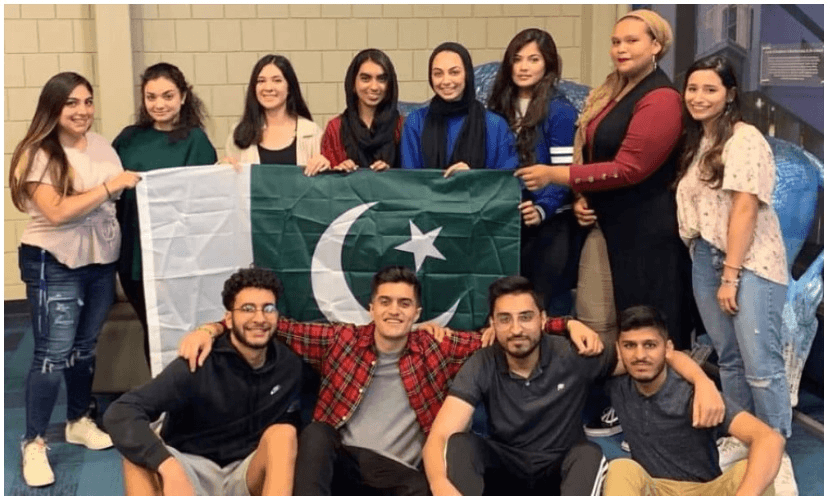
Nearly 11,000 Pakistani students were enrolled at US universities in 2024 — an all‑time high and an 8.1 per cent increase from the previous year, according to the Open Doors Report published by the Institute of International Education. The Pakistani American community now numbers between 680,000 and 795,000 people, making it one of the fastest‑growing South Asian groups in the country, according to Pew Research Center analysis of US Census Bureau data. This guide covers everything you need to know about daily life as a Pakistani student in the United States. You will learn exactly where to find halal food in every major student city, which mosques and Islamic centres serve the largest congregations, how to connect with Pakistani student associations before you even land, what living costs to budget for, how on‑campus work and OPT actually function, and how to handle cultural adjustment without losing your identity. HR Consultant has guided hundreds of Pakistani students through their American journey, and this guide shares the practical steps that make the first weeks feel manageable.
Halal food is everywhere — here is exactly where to find it
Supermarkets and South Asian grocery stores
The Islamic Food and Nutrition Council of America, established in 1982 and commonly called IFANCA, certifies over 4,000 halal products sold across the United States. Its Crescent‑M logo appears on packaging in Walmart, Costco, and Kroger stores in neighbourhoods with significant Muslim populations. You can shop at mainstream supermarkets for everyday halal meat without needing a specialist store. The Zabihah app, which has mapped over 45,000 halal restaurants and grocery stores since launching in 1998, is the most reliable free tool for finding halal food near your campus. Download it before you leave Pakistan and set your location to your university city.
South Asian grocery stores are the backbone of Pakistani student cooking. Stores like Al Aqsa Supermarket in Buffalo specialise in fresh halal meat, South Asian groceries, and Pakistani staples including masala spices, lentils, and rice varieties that are hard to find in regular supermarkets. Every major city with a Pakistani community has at least one dedicated South Asian grocery store. If you are heading to a smaller college town, plan to make a monthly trip to the nearest large city for bulk shopping, and join your campus Pakistani student group chat to coordinate shared rides.
New York City — the largest halal food scene in the country
New York City has the largest Muslim population of any US city, with an estimated 769,000 Muslims across the five boroughs. Jackson Heights, Queens is the most concentrated halal food neighbourhood in the city. Roosevelt Avenue and 74th Street form the centre of a South Asian dining district, according to HalalSpy’s NYC guide. The Islamic Cultural Center of New York on 96th Street and Third Avenue in Manhattan was the first purpose‑built mosque in the city and remains one of its largest.
Halal street carts operate on nearly every major avenue in Manhattan. The Halal Guys on 53rd Street and 6th Avenue is the city’s most famous halal cart and a reliable go‑to for students. Sami’s Kabab House in Kensington and Ayat in Bay Ridge serve authentic South Asian halal cuisine. A full meal of biryani, naan, and curry costs between $12 and $20 in Jackson Heights. Brooklyn has a growing Pakistani community with halal butchers and grocery stores clustered around Coney Island Avenue.
Chicago — Devon Avenue and the Mosque Foundation
Chicago’s Muslim community is one of the largest in the Midwest, with over 400 mosques in Illinois. Devon Avenue on the North Side is the city’s primary South Asian commercial strip, lined with halal restaurants, butchers, and grocery stores for several blocks. Usmania Fine Dining and Bundoo Khan are both certified halal Pakistani restaurants that draw customers from across the metropolitan area. The Mosque Foundation in Bridgeview serves over 50,000 Muslims in the Chicago area through educational programmes, youth activities, and community gatherings.
Ghareeb Nawaz, a 24‑hour Pakistani and Indian halal restaurant, is a favourite among students for its large portions at budget prices. During Ramadan, Chicago becomes lively with taraweeh prayers, community iftars, and Eid festivals. The Devon Avenue area alone has over a dozen halal restaurants within walking distance of each other, making it easy to eat out without worrying about certification.
Houston — Little Pakistan on Hillcroft Avenue
Houston is home to more than 200,000 Muslims and one of the most diverse Muslim communities in the country. The Hillcroft Avenue corridor, sometimes called Little Pakistan, is an ethnic enclave predominantly of Pakistani and Indian restaurants and businesses, according to ABC13 reporting. The Islamic Society of Greater Houston, established in 1969, operates 22 Islamic centres and is one of the largest Islamic organisations in North America. Aga’s Restaurant serves Pakistani halal cuisine and is a community staple, while Phoenicia Specialty Foods and multiple butcher shops along Hillcroft provide everything you need for home cooking. Houston also offers strong educational opportunities, with Rice University, University of Houston, and Baylor College of Medicine all within a city that has a supportive Muslim and Pakistani community.
Dallas, Atlanta, and smaller college towns
Dallas has a growing Pakistani community with halal grocery stores and restaurants concentrated in Richardson and Plano. The Islamic Association of North Texas in Richardson is a major community hub. Atlanta’s Muslim community is one of the fastest growing in the southeastern United States, with Masjid Al‑Faruq in Midtown being one of the largest mosques in the region. The Clarkston area, east of Atlanta, has a significant refugee community with Somali, Afghan, and Middle Eastern halal restaurants. Washington, D.C. has the Islamic Center of Washington on Embassy Row, which opened in 1957 and remains one of the most prominent mosques in the United States. Falls Church, Herndon, and Silver Spring in the Virginia and Maryland suburbs have strong Muslim concentrations.
In smaller college towns, halal food is less abundant but not impossible to find. The Zabihah app is essential. Many Pakistani students form group chats to place bulk halal meat orders from the nearest major city. Some university dining halls now serve halal options — check your campus dining services website before arrival. If you are heading to a smaller town, pack basic spices and learn a few simple recipes before you leave Pakistan.
Mosques, Islamic centres, and spiritual life on campus
Major mosques in every region
The United States has approximately 3.5 million Muslims and over 2,700 mosques, with the largest concentrations in New York, California, Texas, Illinois, and New Jersey. The First Amendment to the US Constitution protects religious practice, and Muslims have full legal rights to pray, wear hijab, and observe dietary requirements anywhere in the country. The Islamic Society of Greater Houston is one of the largest Muslim organisations in the country, with 22 centres offering Friday prayers, community programmes, and Islamic classes. In Chicago, the Mosque Foundation and the Islamic Foundation North provide regular Friday prayers and cultural programmes.
Dearborn, Michigan has one of the highest concentrations of Arab Americans in the country, and the Islamic Center of America on Ford Road is one of the largest mosques in North America with capacity for over 3,000 worshippers. Most major US airports provide interfaith or multi‑faith prayer rooms. JFK International, Chicago O’Hare, Dallas/Fort Worth, Los Angeles, Washington Dulles, Houston George Bush, and Detroit Metro all have dedicated prayer spaces, typically open 24 hours.
Campus prayer facilities and Muslim chaplains
Most US universities with significant international student populations provide dedicated multi‑faith prayer rooms with separate spaces for men and women. These rooms include wudu facilities, prayer mats, and copies of the Quran. University Muslim chaplains are employed specifically to support students of Islamic faith, offering spiritual guidance, pastoral care, and practical advice on balancing academic life with religious obligations. Chaplains can help arrange deadline extensions or exam adjustments if they conflict with religious observances such as Eid.
During Ramadan, iftar events are held at mosques and Islamic centres across the country. Many are open to travellers and new students. University Islamic societies arrange daily iftar meals on campus, often free or heavily subsidised. The Muslim Pro and IslamicFinder apps provide accurate prayer times adjusted to your GPS location, which is essential since prayer times vary significantly across US time zones.
Your Pakistani student network is already waiting
Pakistani Student Associations — join before you land
Almost every major US university with a Pakistani student population has an active Pakistani Student Association. The Pakistani Students Association at Columbia University was founded in 1992 and runs cultural, educational, social, and athletic activities throughout the year. The Pakistani Student Association at the University of Michigan and the PSA at the University of California San Diego operate similar programmes. Search for your university’s PSA on Instagram or the student union website before you travel. Most societies create WhatsApp groups for new members before the academic year begins.
Introduce yourself in the group, ask about accommodation and course selection, and join the first event. The connections you make through the PSA often become your closest friends and support network throughout your degree. Senior students who have already navigated the adjustment process can offer practical advice on everything from where to find halal meat to how to handle a difficult roommate.
Muslim Students Association — the largest faith‑based student network
The Muslim Students Association was founded in 1963 at the University of Illinois Urbana‑Champaign and now has chapters on over 600 campuses across the United States. MSA is often the largest and most active religious student organisation on campus, hosting weekly halaqas, social events, and interfaith dialogues. Joining MSA alongside PSA gives you access to a broader network of Muslim students from diverse backgrounds. Together, these two organisations form the core of your social and spiritual support system during university.
What daily life actually costs
Monthly living expenses by city
Living expenses vary dramatically by city. New York, San Francisco, and Boston are the most expensive. Housing is always your largest expense, typically consuming 60 to 70 per cent of your monthly budget. The table below gives realistic monthly costs based on what Pakistani students actually spend in each city.
| City | Shared Room (Monthly) | Food (Monthly) | Transport | Total (Approx.) | Pakistani Area |
|---|---|---|---|---|---|
| New York City | $800–$1,500 | $300–$500 | $130 MetroCard | $1,800–$2,800 | Jackson Heights, Brooklyn |
| Chicago | $500–$900 | $250–$400 | $75 CTA pass | $1,500–$2,200 | Devon Avenue |
| Houston | $450–$800 | $250–$400 | $50–$100 | $1,400–$2,000 | Hillcroft (Little Pakistan) |
| Dallas | $500–$850 | $250–$400 | $80 DART pass | $1,500–$2,100 | Richardson |
| Atlanta | $450–$750 | $250–$350 | $60 MARTA pass | $1,300–$1,800 | Clarkston |
| College Town (Midwest/South) | $350–$600 | $200–$350 | $30–$60 | $1,000–$1,600 | Varies |
Health insurance is mandatory and costs between $1,500 and $2,500 per year. Most universities include it in their fees or offer a university‑sponsored plan. Textbooks cost $500 to $1,200 per semester. Save by buying used books, renting from Amazon, or using the university library. A phone plan with data costs $30 to $60 per month with providers like T‑Mobile, AT&T, or Mint Mobile.
How to save money as a student
Sharing accommodation with roommates is the single most effective way to reduce expenses. Cooking at home rather than eating out saves $200 to $400 per month. Most universities offer free access to campus gyms, counselling services, and events, reducing entertainment and wellness costs. Student discounts on Amazon Prime, Spotify, Apple Music, and public transport are worth claiming immediately upon enrolment. Cities like Houston, Atlanta, Pittsburgh, Tampa, and Indianapolis offer a balance between quality education and manageable living expenses.
Part‑time work and OPT — how earning works on an F‑1 visa
On‑campus work rules
F‑1 visa holders can work up to 20 hours per week on campus during the academic year and full‑time during scheduled breaks. On‑campus jobs include library assistant, dining hall worker, research assistant, tutor, and administrative roles. Wages range from $10 to $18 per hour depending on the role and location. These jobs do not require separate work authorisation beyond your F‑1 status. Most universities have an online job portal where positions are listed. Apply early — the best roles are filled quickly at the start of each semester. Always confirm with your university’s Designated School Official before accepting any off‑campus role, because violating work limits can result in the termination of your F‑1 status.
Optional Practical Training — working after graduation
Optional Practical Training allows F‑1 students to work in the United States for up to 12 months after completing their degree, according to USCIS official guidance. STEM graduates in fields like engineering, computer science, and data science can apply for a 24‑month extension, giving a total of 36 months of work authorisation. The OPT application takes 90 to 120 days to process, so submit it three to four months before your expected graduation date. Many Pakistani graduates use this period to gain professional experience and then transition to an H‑1B work visa sponsored by their employer.
Cultural adjustment — what to expect and how to handle it
American communication and classroom culture
Americans are typically direct in their communication. They say what they mean. For students from Pakistan, where indirect communication and reading between the lines are more common, this can feel jarring. Do not take blunt responses personally — being direct is considered respectful in US culture. Friendships often start casually and take time to deepen. Dropping by unannounced is uncommon.
US professors expect class participation, independent thinking, and punctuality. Students often address professors by their first name, and this is not considered disrespectful. Asking questions during lectures is encouraged and seen as a sign of engagement. Academic integrity is taken seriously. Plagiarism, even unintentional, can result in course failure or disciplinary action. Your university’s writing centre offers free tutoring to help you adapt to American academic writing expectations, which favour clarity, structure, and direct argumentation.
Homesickness and mental health support
Feeling lonely is common and expected. You are far from family, missing familiar sights, sounds, and routines. Stay in regular contact with family through WhatsApp or Zoom, but also build a routine that keeps you busy and engaged. Most US campuses offer free, confidential mental health counselling. If you feel overwhelmed, seek help — it is confidential and stigma‑free. Exercise helps with stress. Use your campus gym, walk regularly, or join a fitness class. The PSA on your campus is often the single best resource for emotional support during the first few months. Senior students who have already navigated the adjustment process can offer practical advice on everything from where to find halal meat to how to handle a difficult roommate. Say yes to campus events, even when you feel like staying in.
Get expert support for your USA journey
HR Consultant services for Pakistani students heading to the USA
Horizon Routes Consultant specialises in helping Pakistani students prepare for life in the United States, not just secure admission. Our pre‑departure orientation covers accommodation booking, bank account setup, health insurance selection, mobile phone plan guidance, and connecting you with the Pakistani Student Association on your campus before you land. We maintain direct relationships with EducationUSA and USEFP, the official US government sources for higher education information, which advise hundreds of Pakistani students each year through the application and transition process.
Our team includes former Pakistani students who have studied at American universities and understand the journey firsthand. We provide ongoing visa guidance, help with CPT and OPT applications, and offer a dedicated point of contact throughout your first year. To begin planning your American student life, contact HR Consultant for a free consultation.
- Phone: +92 51 1234567
- Email: info@hrconsultant.pk
- Office Hours: Monday to Saturday, 10:00 AM to 7:00 PM (PKT)
- Location: Blue Area, Islamabad, Pakistan
- Website: www.hrconsultant.pk

